🌐 日本語版はこちら: metaverse-jp.com で読む
[2026 Edition] The Complete Guide to Omniverse DSX: Digital Twins 2.0 and the Rise of AI Factories
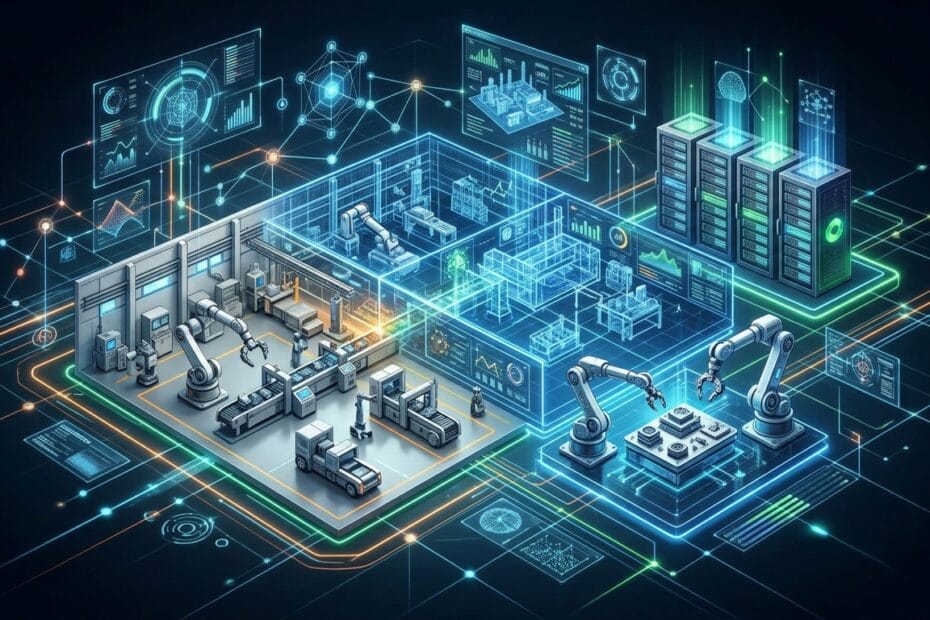
At NVIDIA’s highly anticipated GTC 2026 technology conference in March, the company unveiled a next-generation platform that is fundamentally rewiring global industrial infrastructure: the NVIDIA Omniverse DSX Blueprint. Moving far beyond the early days of consumer-focused virtual reality, the metaverse has matured into a mission-critical enterprise tool. This article provides an in-depth, objective analysis of “Digital Twin 2.0″—a paradigm where gigawatt-scale, multi-billion-dollar AI factories are meticulously simulated in virtual space before a single physical brick is laid.
The metaverse is no longer a “gaming concept.” It has evolved into an essential industrial infrastructure used to perfectly simulate massive, power-hungry next-generation AI data centers (AI factories) in virtual space. This preemptive modeling is now the only viable way to mitigate the extreme financial and operational risks of modern physical construction.
1. The $1 Trillion Shift: Why “AI Factories” Are Replacing Data Centers
Behind every prompt entered into generative AI platforms lies an unprecedented scale of physical computing infrastructure. During his GTC 2026 keynote, NVIDIA CEO Jensen Huang highlighted a staggering metric: global computing demand has surged by a factor of 1 million over the past two years. Consequently, NVIDIA projects its AI-related revenue to hit the $1 trillion mark by 2027.
To support this explosive demand, the industry has pivoted to a new architectural concept: the AI Factory. While traditional data centers acted as passive digital warehouses for storing and retrieving data, AI factories are highly active production facilities. They take in raw electricity and data, and continuously manufacture “intelligence” (AI model training, inference, and token generation).
However, constructing these AI factories comes with a severe physical bottleneck: thermal management and energy procurement. Recent global market data indicates that the United States alone is facing a grid interconnection backlog exceeding 200 gigawatts, while the global backlog for AI infrastructure equipment has surpassed $300 billion.
Cooling the extreme heat generated by ultra-high-density GPU clusters—such as the Vera Rubin architecture—means the traditional “build first, optimize later” approach is dead. A miscalculation of just a few centimeters in a liquid cooling pipeline’s design can lead to catastrophic thermal runaway, forcing hundreds of millions of dollars worth of AI servers offline.
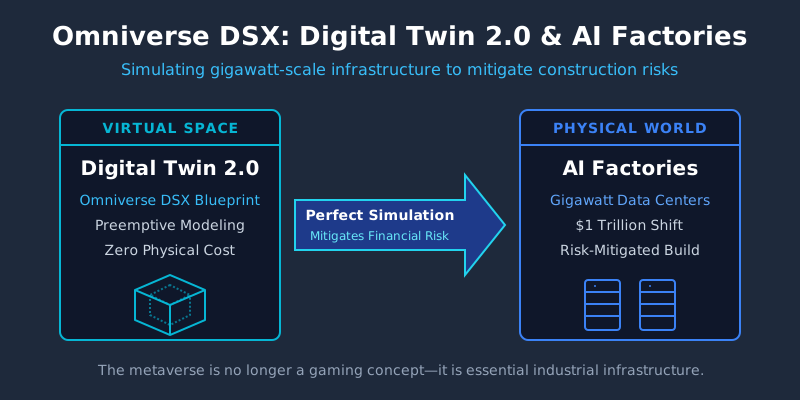
A “1 million-fold” increase in compute demand illustrates how physical infrastructure is being pushed to its absolute limits. Securing power and managing heat are no longer just IT operational headaches; they are top-tier national security and energy grid challenges across North America, Europe, and Asia.
2. The Impact of Omniverse DSX Blueprint: Unveiling Digital Twin 2.0
To break through these physical limitations, NVIDIA introduced the NVIDIA Omniverse DSX Blueprint. This is a comprehensive reference architecture designed to completely engineer, simulate, and optimize gigawatt-scale AI factories in a virtual environment prior to physical groundbreaking.
Omniverse DSX is not a mere 3D visualization tool. It is deeply integrated with the latest “Vera Rubin DSX AI Factory reference design” and executes highly complex, real-time physics calculations:
- Computational Fluid Dynamics (CFD): Integrating with industrial software giants like Cadence, the platform predicts airflow between server racks and temperature fluctuations within liquid cooling pipes down to the millimeter.
- Power Grid Simulation: Utilizing tools like ETAP, engineers can simulate the exact electrical spikes that occur when tens of thousands of GPUs hit maximum load simultaneously, ensuring local municipal power grids are not overwhelmed.
- Network Optimization: The system calculates cable lengths and latency for high-speed interconnects like Spectrum-X Ethernet within the virtual space, eliminating data transfer bottlenecks before cables are physically cut and laid.
According to official technical documentation, leveraging Omniverse DSX allows enterprise operators to maximize their “tokens-per-watt” generation and drastically reduce the “Time to first production”—the critical window between facility construction and the moment the first AI model begins generating revenue. This physical-law-abiding simulation is the true essence of Digital Twin 2.0.
Think of Omniverse DSX as a zero-risk testing ground for the world’s most expensive and complex puzzles. Because engineers can test the flow of electricity and thermodynamics perfectly in a virtual space before tightening a single physical screw, the cost of post-construction retrofitting is effectively reduced to zero.
3. Traditional Data Centers vs. Omniverse DSX (Comparison)
To understand how digital twin-led methodologies are disrupting AI infrastructure development, we can compare the traditional approach with the Omniverse DSX framework based on objective industry metrics.
| Metric | Traditional Data Center Build | Omniverse DSX AI Factory |
|---|---|---|
| Design Process | Siloed 2D CAD drawings and static 3D models. | Unified, dynamic digital twin based on the OpenUSD standard. |
| Thermal & Power Validation | Physical mockups or post-deployment manual adjustments. | Pre-construction, real-time physics simulations (CFD, electrical load). |
| Operational Phase | Reactive maintenance via CCTV and fragmented sensor dashboards. | Synchronized physical-virtual state; predictive IT/OT auto-optimization. |
| Primary Optimization KPI | PUE (Power Usage Effectiveness) for overall facility efficiency. | Tokens-per-watt (AI tokens generated per unit of power consumed). |
If the traditional method is “building a house while looking at a paper blueprint,” Omniverse DSX is “building the house in a virtual simulation, subjecting it to a Category 5 hurricane (peak AI compute load), and ensuring it survives before pouring the real concrete.” For multi-billion-dollar CapEx investments, this distinction dictates market survival.
4. Industry Leaders and Global Case Studies
The introduction of Omniverse DSX has prompted global infrastructure giants to rapidly overhaul their AI factory construction methodologies. Based on the latest 2026 market data, here are how key partners are deploying the technology:
Case Study 1: Switch’s “EVO AI Factories”
Leading data center operator Switch is utilizing the Omniverse DSX Blueprint to design and operate its next-generation “EVO AI Factories.” By integrating their proprietary Living Data Center (LDC EVO) system with Omniverse, Switch models every process parametrically—from macro site planning down to individual server rack placement. When introducing the new Vera Rubin servers, thermal and power simulations that previously took weeks are now completed instantaneously in the virtual environment.
Case Study 2: DDN’s “Sovereign AI Factory”
Data intelligence provider DDN has adopted the Omniverse DSX Blueprint for its Sovereign AI architecture—facilities designed to keep highly classified national or corporate data strictly within domestic borders. Already operational for maritime surveillance in Indonesia and cultural intelligence projects at the Louvre Abu Dhabi, DDN is expanding this blueprint across the UAE, Oman, the US, and the EU throughout 2026. The ability to maximize tokens-per-watt within a strict zero-trust security perimeter has been a major selling point.
Case Study 3: Flex’s Modular Infrastructure
Global manufacturing solutions provider Flex has unveiled a factory-prefabricated, modular AI infrastructure line based on Omniverse DSX reference designs. By packaging 800 VDC power racks and high-density liquid cooling systems into modular units, Flex drastically reduces on-site assembly time. This allows them to meet the surging demand for AI infrastructure by applying “manufacturing economies of scale” to data center construction.
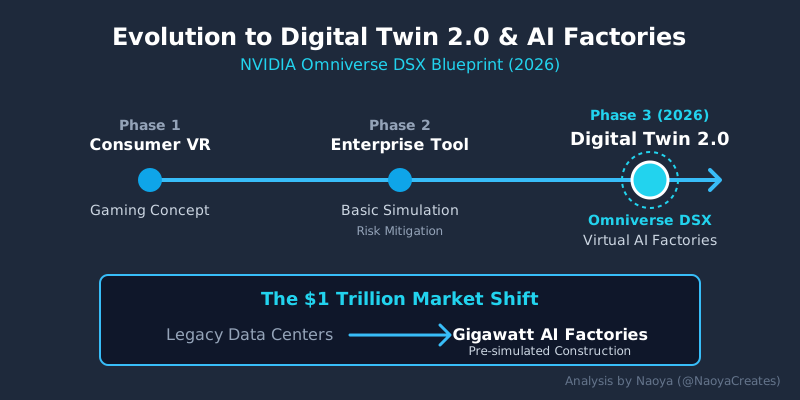
These deployments prove that AI is no longer solely the domain of software engineers. It is now deeply intertwined with commercial real estate, electrical engineering, HVAC design, and global supply chain logistics. Expertise in the physical sciences is rapidly becoming the backbone of the AI revolution.
5. Global Impact: How the US, EU, and APAC are Adapting
The global rush to construct AI factories is creating massive ripple effects across international markets. For tech professionals and enterprise leaders worldwide, three major macro-trends are emerging:
1. Sovereign AI and Severe Grid Constraints
From Data Center Alley in Northern Virginia to major hubs in Frankfurt and Dublin, the push for “Sovereign AI”—keeping data processing localized due to regulations like the EU AI Act—is colliding with severe power grid limitations. Many European municipalities are enforcing strict renewable energy mandates and capping data center power usage. In this environment, utilizing Omniverse DSX to simulate and squeeze every ounce of efficiency out of a facility (maximizing tokens-per-watt) is not just a cost-saving measure; it is a strict regulatory necessity for securing building permits.
2. Synergy with Global Industrial Robotics
At GTC 2026, NVIDIA highlighted deepening partnerships with global industrial automation leaders such as Siemens, ABB, and Rockwell Automation. Omniverse is being deployed not just for data centers, but to create digital twins of massive automotive production lines and automated logistics hubs. By merging the established operational technology (OT) of Western and APAC manufacturing giants with NVIDIA’s physical AI simulations, the global supply chain is entering a new era of predictive, self-healing automation.
3. CapEx Optimization Amidst Supply Chain Volatility
The latest Vera Rubin and Blackwell GPUs require staggering capital expenditure (CapEx). Combined with global inflation and fluctuating hardware import costs, the financial barrier to entry for AI infrastructure is higher than ever. Consequently, enterprise CFOs are no longer approving “build and test” budgets. They are demanding guaranteed Return on Investment (ROI) models before construction begins. Omniverse provides this financial certainty by proving the exact operational efficiency of a facility in virtual reality first.
In regions facing strict energy regulations and high hardware costs, the ability to “front-load failure” into a virtual simulation makes Omniverse DSX a critical business lifeline. The intersection of traditional industrial engineering and digital twin software is where the next decade’s most lucrative business opportunities lie.
6. [Expert Analysis] The Future of the Industrial Metaverse and UX
[Author’s View: Market Outlook and Technology Evaluation]
The overarching narrative of the metaverse has decisively shifted from consumer entertainment to a high-value industrial simulation layer. While products like the Apple Vision Pro continue to iterate on consumer-facing spatial computing UX, NVIDIA’s Omniverse has quietly established an absolute monopoly over B2B industrial infrastructure.
The most significant breakthrough here is “cross-industry data interoperability.” By championing OpenUSD as the universal language of 3D data, NVIDIA has successfully merged previously siloed information—architectural CAD files, HVAC fluid dynamics, and electrical grid data—into a single, coherent spatial environment. The ability to intuitively visualize massive physics calculations is a UX breakthrough that is fundamentally transforming how global infrastructure is engineered.
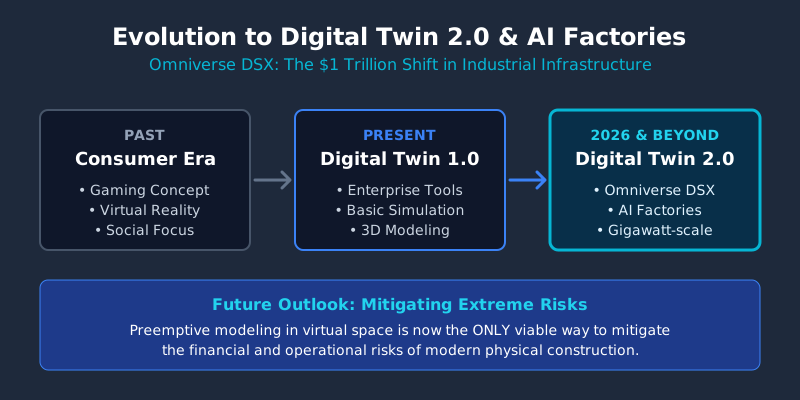
The metaverse didn’t “die”—it put on a hard hat and went to work in the industrial sector. As the foundational layer supporting the physical expansion of AI, enterprise digital twins represent the most secure and predictable growth sector in tech for the next decade.
7. Conclusion
The critical takeaways regarding Omniverse DSX and the future of AI factories are:
1. The Scale of AI Demands Simulation: The exponential growth in AI compute requires gigawatt-scale facilities with unprecedented cooling and power needs. Pre-construction simulation (digital twins) is now mandatory to prevent catastrophic financial and physical failures.
2. Bridging Physics and Digital: NVIDIA’s Omniverse DSX Blueprint has rewritten the rules of infrastructure development by allowing complex thermal, electrical, and network physics to be calculated in real-time within a virtual space.
3. Global Strategic Importance: In a world constrained by power grid limits and high hardware costs, the ability to maximize “tokens-per-watt” through digital twin technology will determine which enterprises—and which nations—lead the global AI race.
Behind the seamless AI tools you use daily are massive, heat-generating GPU clusters. The technology used to design the factories that house, cool, and power these clusters down to the millimeter in virtual space is Omniverse DSX.
8. Next Steps: Actionable Takeaways for Today
To navigate this massive technological shift, here are three actionable steps professionals can take today:
* Identify Digital Twin Opportunities in Your Workflow: Are there physical processes in your organization (e.g., warehouse logistics, retail layouts, product thermal testing) that cost too much time and money to prototype physically? Begin exploring lightweight 3D simulation tools to virtualize these tests.
* Learn the Basics of OpenUSD: The OpenUSD framework is rapidly becoming the “HTML of the industrial metaverse.” Familiarize yourself with this standard by exploring free educational resources (such as the Alliance for OpenUSD) to understand how disparate 3D data is unified.
* Understand the “Cost” of AI: The next time you deploy an AI model or run a complex prompt, consider the physical power (tokens-per-watt) required on the backend. Learning to optimize AI workloads and write more efficient code directly contributes to lowering the global energy footprint of AI infrastructure.
The evolution of AI is no longer purely a software game. By consistently tracking trends in physical hardware and infrastructure (such as the announcements from GTC), you can anticipate the next major business cycles before the broader market catches on.
Data Sources
- NVIDIA Releases Vera Rubin DSX AI Factory Reference Design and Omniverse DSX Digital Twin Blueprint With Broad Industry Support (NVIDIA)
- NVIDIA Vera Rubin DSX AI factory, Omniverse twin (StockTitan)
- DDN and Aleria Announce Adoption of NVIDIA Omniverse DSX Blueprint for Sovereign AI Factory (DDN)
- Switch is Evolving AI Factories with NVIDIA Omniverse DSX Blueprint (Switch)
- Flex Accelerates AI Factory Deployment with NVIDIA Omniverse DSX Reference Designs (Flex)
- From AI Models to AI Factories: What Changed Between NVIDIA GTC 2025 and 2026 (NSTARX INC)
Disclaimer: This site is intended for informational purposes regarding the metaverse and spatial computing industries and does not constitute financial or investment advice. Any investments in virtual real estate, NFTs, or related tech equities should be made at your own discretion and risk.
About the Author: Naoya — Web3 & Metaverse Researcher. Analyzing the latest spatial computing platforms and virtual economies to forecast the future of digital lifestyles and enterprise infrastructure.
🔗 Follow on X: @NaoyaCreates