
Personally, Stablecoins shifting to infrastructure marks a new era of utility.#Stablecoins #Web3
Quick Video Breakdown: This Blog Article
This video clearly explains this blog article.
Even if you don’t have time to read the text, you can quickly grasp the key points through this video. Please check it out!
If you find this video helpful, please follow the YouTube channel “MetaverseTrendsHub,” which delivers daily news.
https://www.youtube.com/@MetaverseTrendsHub
Read this article in your native language (10+ supported) 👉
[Read in your language]
Stablecoins Evolving: Nkiru Uwaje’s Insights on the Shift to Business Infrastructure
🎯 Difficulty: Advanced
💎 Core Value: Trust Minimization / Interoperability / Decentralized Finance
👍 Recommended For: Fintech Professionals, Crypto Ecosystem Builders, Business Leaders Exploring Digital Payments
Lila: Jon, I’ve been reading about this piece by Nkiru Uwaje on stablecoins transitioning from experimental tools to core business infrastructure. With macro trends like regulatory shifts and increasing adoption in 2026, what does this mean for decentralization and trust in financial systems?
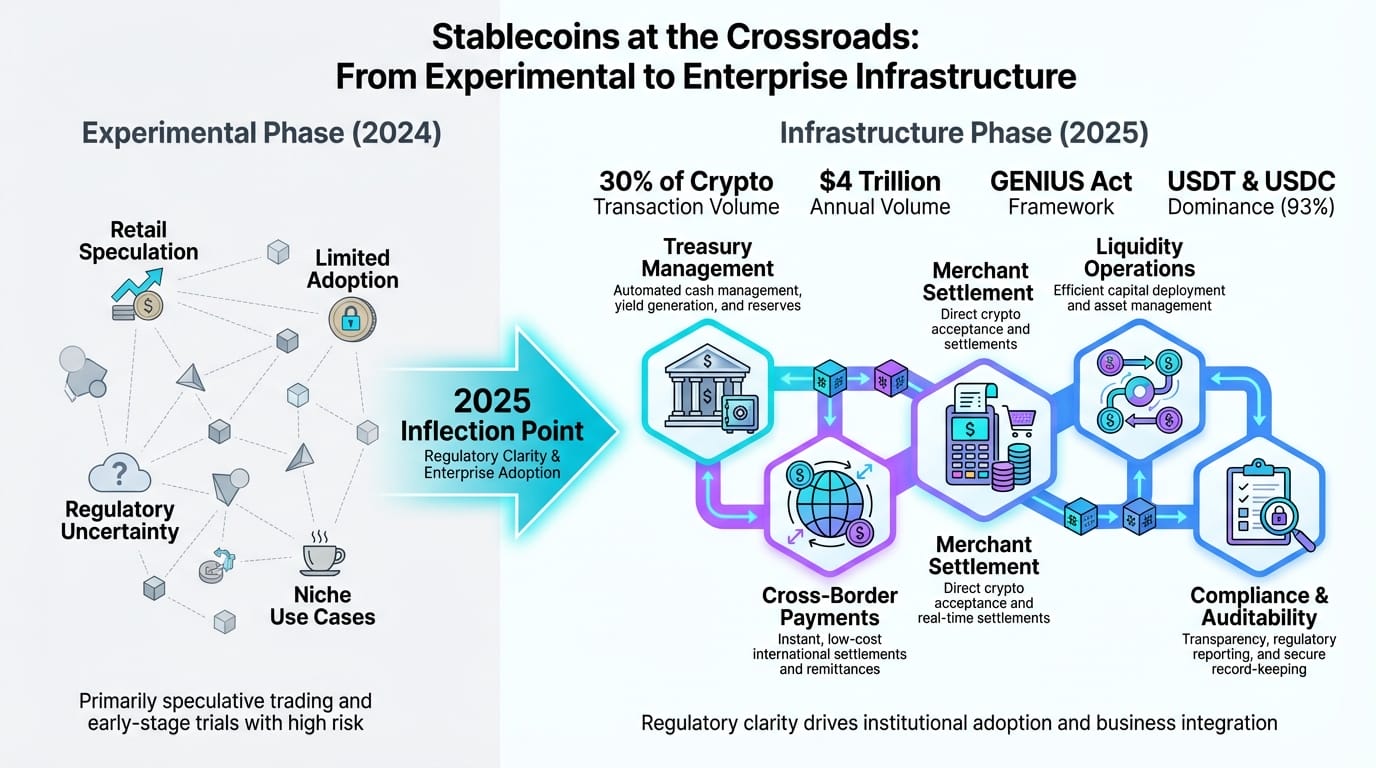
Jon: Absolutely, Lila. Nkiru Uwaje’s analysis highlights a pivotal macro trend: stablecoins are moving beyond crypto-native experiments into trusted, scalable infrastructure. In decentralized systems, this shift emphasizes trust minimization, where protocols reduce reliance on central intermediaries through cryptographic guarantees and smart contract logic. For instance, stablecoins like USDC leverage blockchain‘s immutable ledger to enable verifiable, low-trust transactions, aligning with broader decentralization goals in global finance.
Understanding the Web2 to Web3 Transition in Stablecoins
Lila: That’s intriguing. But how do stablecoins bridge the gap between centralized Web2 systems and decentralized Web3? I’m thinking about issues like data ownership and resistance to censorship.
Jon: Great question. In Web2, financial systems are centralized—think banks controlling ledgers, where users have limited ownership and transactions can be censored or reversed. Web3 stablecoins invert this: users hold cryptographic keys for true ownership, enabling censorship resistance via distributed networks. Composability is key here; stablecoins integrate with other protocols, like DeFi lending platforms, creating modular ecosystems. Uwaje points out this evolution fosters efficiency in business ops, reducing cross-border friction.
Lila: So, on a technical level, what are the core mechanisms driving this shift? Token design seems crucial.
Jon: Precisely. Stablecoins employ sophisticated token designs, often using collateralized models (e.g., fiat-backed like USDC) or algorithmic stabilization. Decentralization logic relies on smart contracts—self-executing code on blockchains like Ethereum—for peg maintenance and redemptions. Technical architecture includes oracles for price feeds and layer-2 solutions for scalability, minimizing gas fees. In ecosystem roles, they act as settlement layers, as Uwaje describes, integrating with institutional trading for collateral efficiency.
Lila: Can you break down some concrete use cases? How are businesses actually applying this?
Jon: Certainly. First, cross-border payments: Stablecoins enable real-time, low-cost transfers, bypassing SWIFT’s delays—Uwaje notes their role in B2B operations. Second, treasury management: Firms use them for yield-generating holdings, leveraging DeFi protocols for operational liquidity. Third, settlement tools in trading: As institutional collateral, they streamline margin calls and reduce counterparty risk, transforming brokers’ workflows.
| Web2 | Web3 / Metaverse |
|---|---|
| Centralized banks control transactions, high fees for international transfers. | Decentralized stablecoins enable peer-to-peer, low-fee global payments with user ownership. |
| Data siloed in proprietary systems, prone to censorship. | Immutable blockchain ledgers ensure transparency and resistance to alteration. |
| Limited interoperability between platforms. | Composability allows stablecoins to integrate across DeFi and metaverse ecosystems. |
| Trust reliant on institutions, vulnerable to failures. | Trust minimized via cryptography and consensus mechanisms. |
Lila: This comparison really highlights the advantages. But what about the challenges in this transition?
Jon: Uwaje’s analysis doesn’t shy away from risks: regulatory hurdles, like ensuring compliance without undermining decentralization, and volatility in algorithmic models. Governance remains a contradiction—stablecoins weren’t designed for it fully, yet they’re becoming infrastructure. Technically, scalability via rollups helps, but oracle dependencies introduce centralization points.
Lila: Wrapping up, how should readers approach this evolving landscape?
Jon: Stablecoins enable efficient, trust-minimized financial infrastructure, empowering businesses with seamless global operations. However, unresolved risks include regulatory uncertainty and potential depegging events. Focus on understanding the protocols—study smart contract audits and ecosystem integrations—to build literacy, not chase trends.
Lila: That makes sense. What lingering question should we leave readers with to encourage deeper exploration?
References & Further Reading
- Stablecoins At The Crossroads: Nkiru Uwaje On The Shift From Experimental Use To Everyday Business Infrastructure
- Circle: Stablecoins are the beginning of a new financial infrastructure – Cryptopolitan
- Stablecoins Are Becoming a Settlement Tool – And Brokers Need to Adapt
- Revisiting Stablecoins: Regulation, Risk, and Their Role in Enhancing the Competitiveness of an Investment Portfolio
▼ AI tools to streamline research and content production (free tiers may be available)
Free AI search & fact-checking
👉 Genspark
Recommended use: Quickly verify key claims and track down primary sources before publishing
Ultra-fast slides & pitch decks (free trial may be available)
👉 Gamma
Recommended use: Turn your article outline into a clean slide deck for sharing and repurposing
Auto-convert trending articles into short-form videos (free trial may be available)
👉 Revid.ai
Recommended use: Generate short-video scripts and visuals from your headline/section structure
Faceless explainer video generation (free creation may be available)
👉 Nolang
Recommended use: Create narrated explainer videos from bullet points or simple diagrams
Full task automation (start from a free plan)
👉 Make.com
Recommended use: Automate your workflow from publishing → social posting → logging → next-task creation
※Links may include affiliate tracking, and free tiers/features can change; please check each official site for the latest details.