
Confused about Web3 airdrops? Discover how BingX Shards works, gain digital ownership, and navigate crypto safely.#BingXShards #Web3Guide #CryptoAirdrops
Quick Video Breakdown: This Blog Article
This video clearly explains this blog article.
Even if you don’t have time to read the text, you can quickly grasp the key points through this video. Please check it out!
If you find this video helpful, please follow the YouTube channel “MetaverseTrendsHub,” which delivers daily news.
https://www.youtube.com/@MetaverseTrendsHub
Read this article in your native language (10+ supported) 👉
[Read in your language]
Demystifying BingX Shards: A Beginner’s Guide to Airdrops and the Web3 Ecosystem
🎯 Difficulty: Beginner Friendly / Wallet Required
💎 Core Value: Digital Ownership / Interoperability
👍 Recommended For: New crypto enthusiasts exploring rewards, casual traders interested in airdrops, beginners learning Web3 basics
Lila: I’ve been hearing a lot about Web3 and things like airdrops, especially with this new BingX Shards phase offering a $200,000 prize pool. But coming from traditional apps like social media or online banking, I’m confused. Why can’t we just stick with Web2? It feels simpler and safer.
Jon: That’s a great starting point, Lila. Let’s break it down with a simple metaphor. Imagine Web2 as a big apartment building where the landlord (like a tech giant) controls everything—you rent a room, but they decide the rules, can kick you out anytime, and even peek into your stuff. Web3 is like owning your own house in a neighborhood where everyone agrees on shared rules without a single boss. The BingX Shards program is essentially a community rewards system in this Web3 world, designed to encourage participation through things like trading quests and airdrops. It’s not about hype; it’s about giving users real ownership over their digital rewards.
Lila: Ownership sounds empowering, but I’m worried about safety. In Web2, if something goes wrong, I can call customer support. How does Web3 handle that, especially with something like an airdrop prize pool?
Jon: Safety is crucial, especially for beginners. Think of your crypto wallet as a digital backpack—you carry your own keys (like a secret password) and no one else can access it unless you share them. Never give away your private keys; that’s rule number one for wallet safety. In the case of BingX Shards, it’s a program by a cryptocurrency exchange that rewards users with ‘Shards’—points you earn through activities like trading or holding assets. These can lead to airdrops, where free tokens are distributed, like surprise gifts in your backpack. But remember, always verify the source to avoid scams; official announcements come from trusted channels.
From Web2 Limitations to Web3 Possibilities
Lila: Okay, the backpack analogy helps. But what exactly are the limitations of Web2 that Web3 fixes? And how does something like BingX Shards fit into this evolution?
Jon: Web2 is centralized, meaning a few companies control your data and can censor or change things without your say. For example, if a platform bans you, poof—your content is gone. Web3 flips this with decentralization, using blockchain as a public ledger where everyone can verify transactions, ensuring censorship resistance. Ownership means you truly control your digital assets, like NFTs or tokens, which can move freely across platforms— that’s composability. BingX Shards builds on this by creating an ecosystem where your earned rewards aren’t locked to one app; they’re part of a broader Web3 network, potentially interoperable with other tools.
Understanding the Core Mechanisms
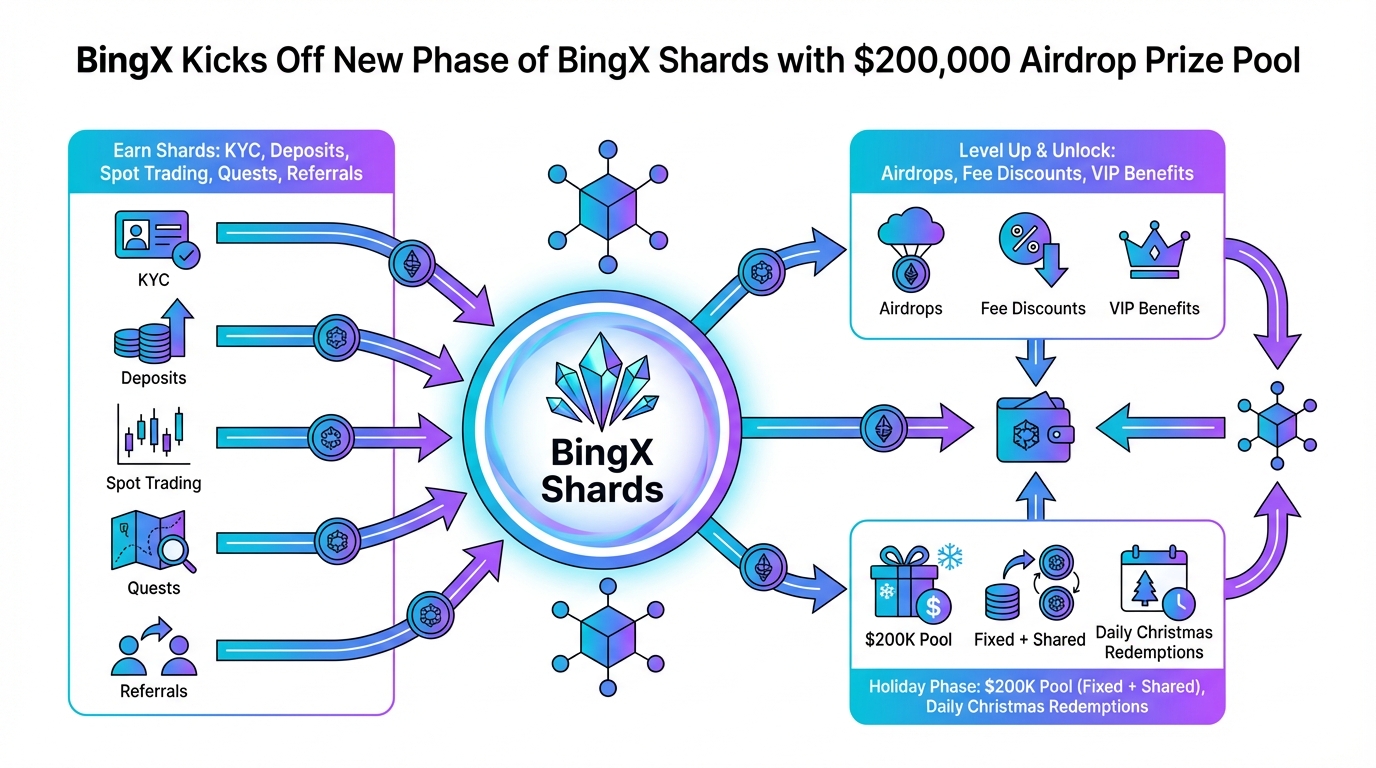
Lila: The diagram looks helpful, but can you explain the basics of how these airdrops and shards work without getting too technical? I don’t want to feel overwhelmed.
Jon: Absolutely, let’s keep it simple. Picture a blockchain as a giant, unbreakable notebook where every entry is permanent and visible to all. Smart contracts are like automated vending machines on this notebook—they run code automatically when conditions are met, no middleman needed. In BingX Shards, shards are like loyalty points earned through quests, such as trading a certain volume. The airdrop is the prize pool distribution—imagine a communal pot of $200,000 in rewards split based on your shards, running from December 22 to January 4, as per recent announcements. It’s all powered by Web3 principles, ensuring transparency so you can check the rules yourself.
Lila: That vending machine idea makes sense. But what about real-world meaning? How does this translate to everyday use?
Jon: Great question. Web3 isn’t just abstract; it’s about practical empowerment. Your wallet acts as a secure keychain for all your digital items, and safety comes from practices like using hardware wallets for extra protection. For BingX, it’s an entry point to Web3—earn shards safely, participate in airdrops, and learn without risking much. Always start small and educate yourself on phishing risks.
Real-World Use Cases in Web3
Lila: Can you give me some concrete examples of how Web3 ecosystems like this apply to real life? Not just trading, but other areas.
Jon: Sure, let’s look at three applications. First, in gaming: Web3 lets you own in-game items as NFTs, like a digital sword you can sell or use across games, unlike Web2 where the company owns everything. BingX Shards could tie into gaming rewards, extending the ecosystem. Second, decentralized finance (DeFi): Think of it as banking without banks—you lend or borrow directly via smart contracts, earning yields transparently. Airdrops like BingX’s encourage participation here. Third, community governance: Web3 DAOs (decentralized autonomous organizations) are like community clubs where token holders vote on decisions. Shards might evolve into governance tools, giving users a say in platform updates.
Web2 vs. Web3 Comparison
| Web2 | Web3 / Metaverse |
|---|---|
| Centralized control by companies, data owned by platforms | User-owned data and assets on decentralized networks |
| Rewards locked to one app, easily revoked | Interoperable rewards like shards or tokens, transferable |
| Vulnerable to censorship and single-point failures | Censorship-resistant, distributed across nodes |
| Customer support for issues, but limited transparency | Self-custody with community tools, full transaction visibility |
| Examples: Facebook, traditional banking apps | Examples: Blockchain-based rewards like BingX Shards, DeFi platforms |
Lila: The table really highlights the differences. It seems Web3 offers more freedom, but are there risks I should watch out for?
Jon: Yes, risks exist—volatility in token values, potential scams in airdrops, or smart contract bugs. Always do your research, use reputable sources, and never invest more than you can afford to lose. Education is key; focus on understanding the tech first.
Wrapping It Up: The Bigger Picture
Jon: In summary, programs like BingX Shards enable true digital ownership and community-driven rewards in Web3, moving us from rented digital spaces to owned ones. It fosters interoperability and transparency, but unresolved risks like security vulnerabilities remind us to proceed cautiously. The ecosystem is evolving, promising more inclusive digital experiences.
Lila: That makes me excited to learn more, but reflective too—how can someone like me start observing without jumping in headfirst?
Jon: Start by reading reliable resources, set up a test wallet with small amounts, and observe ecosystems like this one. It’s about building literacy, not rushing into actions. Keep questioning and learning—that’s the real value.
References & Further Reading
- BingX Kicks Off New Phase of BingX Shards with $200,000 Airdrop Prize Pool
- BingX Kicks Off New Phase of BingX Shards with $200,000 Airdrop Prize Pool (GlobeNewswire)
- Ethereum Glossary: Basic Web3 Terms
- What is Web3? (CoinDesk)