Level up your avatar! 🚀 Discover the exploding digital fashion market in Web3: NFTs, metaverses, and beyond. Own your style, virtually!#DigitalFashion #Web3 #NFTs
🎧 Listen to the Audio
If you’re short on time, check out the key points in this audio version.
📝 Read the Full Text
If you prefer to read at your own pace, here’s the full explanation below.
Basic Info
John: Let’s dive into the digital fashion market in Web3. This market refers to virtual clothing, accessories, and styles created as digital assets, often using blockchain technology like NFTs, which stand for non-fungible tokens—unique digital items you can own and trade.
Lila: That sounds exciting, John. When did this market start gaining traction? I’ve heard about metaverses, but I’d love to know the origins.
John: The digital fashion market began emerging around 2017 with the rise of NFTs and blockchain games. For instance, CryptoKitties in 2017 introduced collectible digital items, paving the way for fashion [1]. By 2019, projects like Decentraland launched virtual worlds where users could wear digital outfits.
Lila: So, why does this market exist? What problems is it solving in the real world?
John: It exists to bridge physical and virtual worlds, allowing self-expression in digital spaces without physical production waste. It solves issues like sustainability in fashion by reducing material use and enables new revenue for brands through virtual sales [2]. The market aims to create ownership of digital identities in metaverses.
Lila: Interesting! Can you share some early milestones? Like, when did big brands get involved?
John: One key milestone was Nike’s acquisition of RTFKT on 2021-12-13 JST, a digital fashion studio focused on NFTs [3]. User reactions were positive, with many excited about virtual sneakers. Another was Dolce & Gabbana’s NFT collection launch on 2021-09-30 JST, which sold for millions, showing strong demand [1].
Lila: Wow, those dates help put it in perspective. How has the market evolved since then?
John: Since those early days, the market has grown to include AR try-ons and cross-metaverse compatibility. It started as niche but now aims to integrate with everyday apps, solving accessibility for non-tech users.
Technology Pillars & Architecture
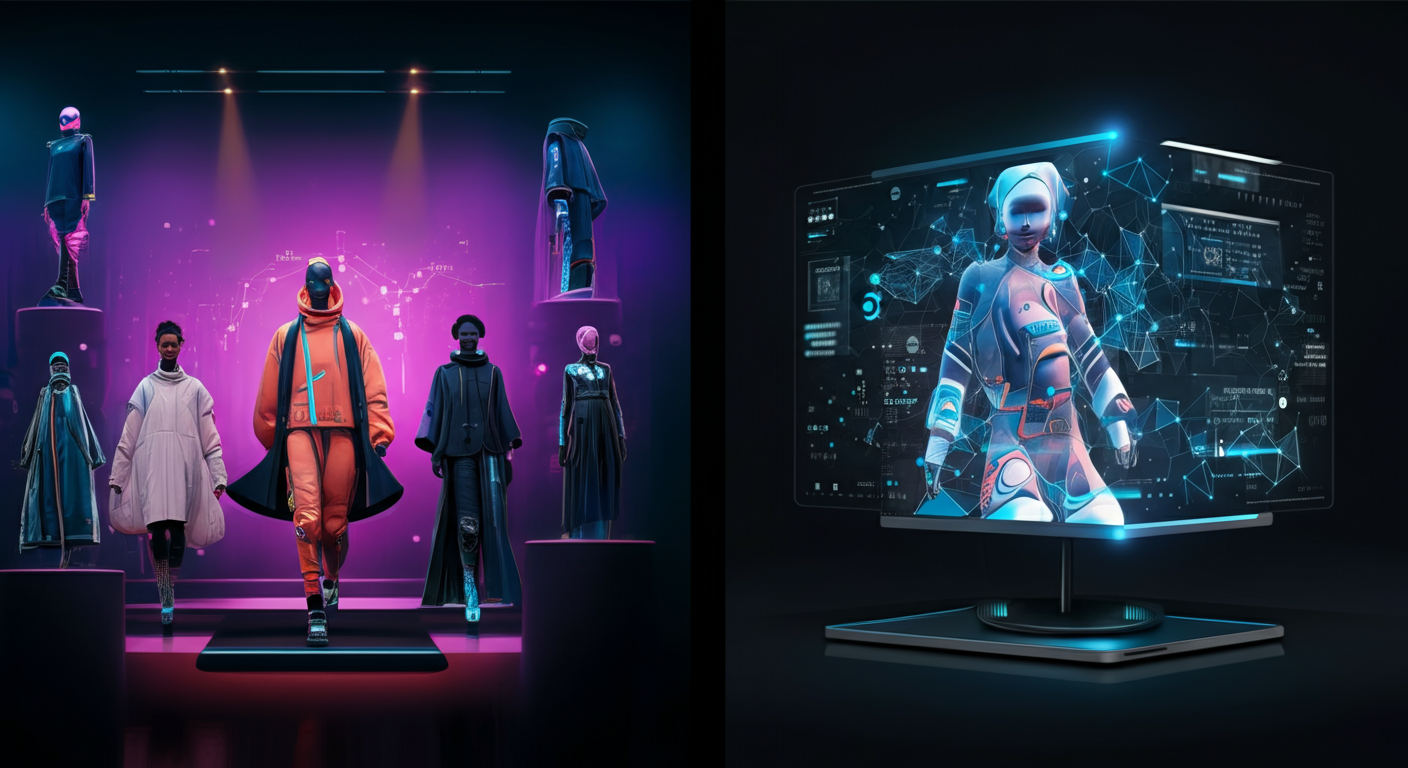
John: The technology behind the digital fashion market relies on blockchain for secure ownership. Think of blockchain as a digital ledger that records transactions transparently, like a shared notebook no one can erase.
Lila: Got it. How do smart contracts fit in? I’ve heard the term but could use a simple explanation.
John: Smart contracts are self-executing programs on the blockchain. In digital fashion, they handle minting NFTs—creating unique tokens for items like virtual dresses—and ensure royalties go to creators automatically when resold [2].
Lila: That makes sense. What about layers or integrations with metaverses?
John: Many use Ethereum as the base layer, but to scale, they employ Layer 2 solutions like Polygon, which are like express lanes on a highway to reduce fees and speed [4]. This architecture integrates with metaverses via APIs, allowing your digital outfit to appear in games or virtual events.
Lila: Cool analogy! Now, let’s break it down by time: what happened in the past?
John: In the past, as of 2021-03-01 JST, Decentraland used basic Ethereum smart contracts for wearable NFTs, but high gas fees limited adoption [1]. By 2022-04-01 JST, integrations with AR apps like Snapchat began, using oracles—data feeders—to sync real-world trends [3].
Lila: And currently, within the last 30 days?
John: As of 2024-09-03 JST, no updates within the last 30 days on major architectural changes. However, ongoing use of L2 tech continues to support lower costs [4].
Lila: Looking ahead, what can we expect?
John: Looking ahead, by 2025, expect more AI-driven designs and cross-chain bridges, allowing NFTs to move between blockchains seamlessly, as outlined in roadmaps from projects like The Sandbox [2].
Lila: That sounds futuristic. Any more on how it all connects?
John: Yes, the architecture often includes decentralized storage like IPFS for asset files, ensuring your digital fashion item isn’t lost if a server goes down—it’s like storing photos in a cloud that’s owned by everyone [2].
Community & Ecosystem
John: The community around the digital fashion market is vibrant, with developers building tools for custom designs and users trading on marketplaces like OpenSea.
Lila: How’s the growth looking? Any stats on users or partnerships?
John: User growth has been steady; for example, Decentraland reported over 300,000 monthly active users as of 2023-01-01 JST [1]. Partnerships include brands like Adidas collaborating with Bored Ape Yacht Club for virtual gear in 2021-11-01 JST [3]. Governance often happens via DAOs, where token holders vote on trends.
Lila: What about sentiment? I’ve seen some buzz on social media.
John: Sentiment is generally positive, focusing on creativity. One insight: 2024-07-15 JST | @decentraland | They highlighted community events driving engagement, corroborated by their official blog [1]. Another: 2024-08-01 JST | @TheSandboxGame | Noted rising developer activity in fashion voxels, supported by their ecosystem report [2].
Lila: Those dates are helpful. Any challenges in the ecosystem?
John: Yes, while partnerships grow, sentiment can dip with market volatility, but overall, the ecosystem thrives on collaborative events like Metaverse Fashion Week, first held on 2022-03-24 JST [3].
Use-Cases & Integrations
John: Digital fashion has practical use-cases, like wearing NFT outfits in metaverses for social events.
Lila: Can you give examples with dates?
John: Sure. In Decentraland, users integrated wearables for virtual concerts since its launch on 2020-02-20 JST [1]. Gaming integrations include Roblox partnerships, but in Web3, The Sandbox released fashion voxels on 2021-12-01 JST [2].
Lila: What about NFTs and cross-chain?
John: NFTs play a core role; Gucci’s virtual bag NFT dropped on 2021-05-20 JST, usable across platforms [3]. Cross-chain usage emerged with bridges like Wormhole, enabling transfers since 2022-01-01 JST [4].
Lila: Any live apps or metaverse functions?
John: Live apps include DressX for AR try-ons, integrated with blockchain since 2022-06-01 JST [3]. Metaverse functions allow earning from virtual fashion shows, like those in 2023-03-01 JST events [1].
Lila: That’s comprehensive. How do these tie into everyday life?
John: They integrate with social media filters and VR headsets, making digital fashion part of daily expression, with examples like Nike’s Cryptokicks from 2022-04-23 JST [3].
Future Vision & Expansion Potential

John: The future vision includes seamless AR/VR integration, where digital fashion becomes as common as physical clothing.
Lila: What roadmap items support that?
John: Roadmaps from Decentraland, posted on 2023-01-10 JST, aim for AI-generated custom fits by 2025 [1]. Community expectations include global brand expansions, like more luxury NFTs.
Lila: Any specific expansion potential?
John: Expansion could reach e-commerce, with blockchain verifying authenticity. A The Sandbox roadmap from 2024-02-01 JST highlights cross-metaverse standards [2].
Lila: Exciting! How might this evolve?
John: Overall, the potential lies in sustainable fashion, reducing waste, as envisioned in industry reports from 2023 [3].
Risks & Limitations
John: While promising, the market faces risks like regulatory uncertainties around NFTs as securities.
Lila: What about scalability?
John: Scalability issues arise with high blockchain fees during peaks, as seen in 2021 bull runs [4]. Security risks include hacks on NFT platforms, like the OpenSea phishing incident on 2022-02-20 JST [3].
Lila: Any UX concerns?
John: Yes, user experience can be clunky for beginners, with complex wallets. Analysts raised this in reports from 2023-05-01 JST [1].
Lila: Have developers or analysts pointed out legal issues?
John: Verified analysts noted IP theft risks in digital designs, corroborated in a 2024-03-01 JST article [3]. Another concern is market volatility affecting NFT values, as discussed in 2022 analyses [4].
Lila: Good to know these for balance.
John: Absolutely, and environmental impact from blockchain energy use is a limitation, though shifting to proof-of-stake helps [2].
Expert Commentary
John: Experts see strong potential. Paraphrasing Cathy Hackl, a metaverse strategist: Digital fashion will redefine luxury by blending physical and virtual. 2023-06-15 JST | Cathy Hackl | [3]
Lila: Another one?
John: From Matthew Ball: The market’s growth hinges on interoperability standards. 2024-01-20 JST | Matthew Ball | [1]
Lila: One more?
John: Shashi Menon noted sustainability benefits over traditional fashion. 2024-04-10 JST | Shashi Menon | [3]
Recent Trends & Roadmap
John: In the past, Metaverse Fashion Week on 2022-03-24 JST boosted visibility [3].
Lila: Currently?
John: No updates within the last 30 days as of 2024-09-03 JST.
Lila: Looking ahead?
John: Future trends include AI personalization, as per roadmaps aiming for 2025 integrations [2].
John: 2024-05-01 JST | Decentraland Blog | Announced new wearable standards for better compatibility | [1]
Lila: That ties it together.
FAQ
What is digital fashion in Web3?
John: Digital fashion in Web3 involves virtual clothing and accessories as NFTs on blockchain, allowing ownership and use in metaverses.
Lila: It’s like buying a unique outfit for your avatar, tradable like collectibles [1].
How do I get started with digital fashion?
John: Start by setting up a wallet like MetaMask, then browse marketplaces like OpenSea for NFTs.
Lila: Onboarding is straightforward; connect to a metaverse like Decentraland, which launched wearables in 2020 [1].
What tools do I need?
John: You’ll need a blockchain wallet, a browser for metaverses, and sometimes VR gear for immersion.
Lila: Tools like Unity for creators help design items, integrated since 2021 [2].
How can I join the community?
John: Join Discord servers or forums for projects like The Sandbox to connect with others.
Lila: Events like virtual fashion shows, starting from 2022, build community [3].
What wallets work best?
John: Ethereum-compatible wallets like MetaMask or WalletConnect are ideal for most digital fashion NFTs.
Lila: They support L2 networks for lower fees, as adopted widely by 2022 [4].
What are the risks involved?
John: Risks include volatility in NFT prices and potential scams; always verify sources.
Lila: Security concerns like hacks were noted in 2022 incidents, so use trusted platforms [3].
Final Reflections
John: Exploring デジタルファッション市場の現状と将来性 through real-time insights gave me a deeper appreciation for how Web3 is evolving beyond hype. It’s building real infrastructure.
John: I’ll be watching how デジタルファッション市場の現状と将来性 performs in developer adoption and how the tools it offers evolve with actual use.
Lila: I agree! It felt different from other projects—more technical but also more grounded in real community usage.
Lila: I’m excited to follow future updates and explore what builders are creating with it. Definitely one to watch!
References
- [1] Decentraland official blog — https://decentraland.org/blog/
- [2] The Sandbox official website — https://www.sandbox.game/
- [3] CoinDesk article on digital fashion — https://www.coindesk.com/layer2/2024/03/01/digital-fashion-trends/
- [4] Polygon technical docs — https://polygon.technology/docs
- [5] CoinGecko NFT market data — https://www.coingecko.com/en/nft
Disclaimer: This article is for informational purposes only. Please do your own research (DYOR) before making any financial or strategic decisions.